Production Line Automation for High- Performance & Scalable Manufacturing Production
Increase output without increasing complexity. RBR Automation designs and delivers production line automation systems that improve throughput, stabilize quality, and reduce dependency on manual processes.
Advanced Industrial Automation Systems for Modern Production Environments
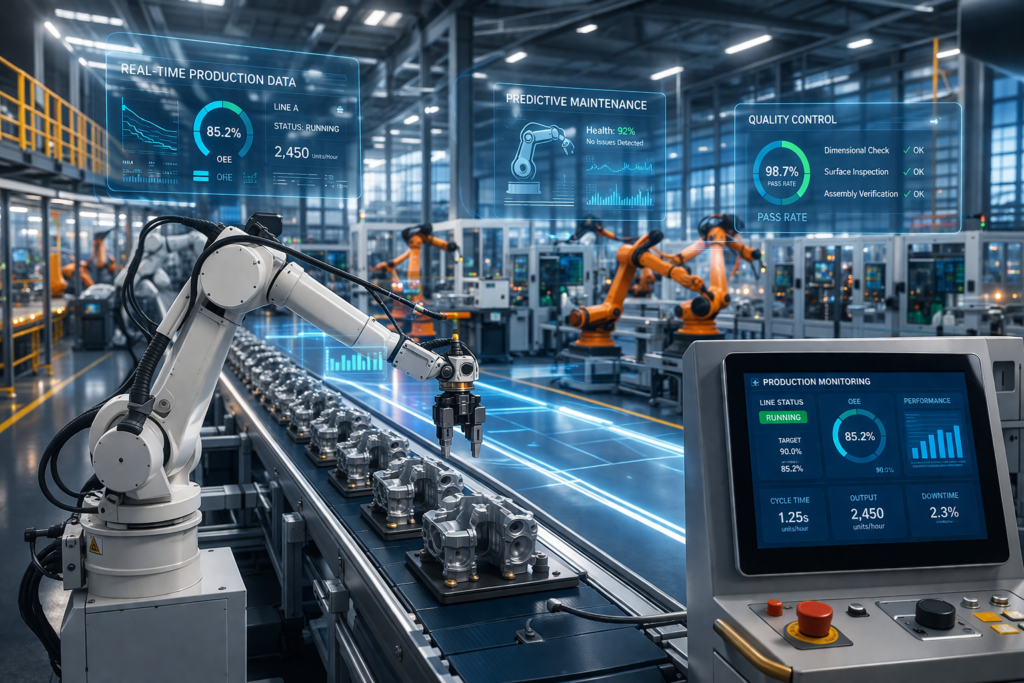
Disconnected workflows, manual interventions, and inconsistent data flow reduce efficiency more than machine limitations. Production Line Automation addresses this by creating a fully synchronized system across your operation.
With well-designed Industrial Automation Systems, you get::
- Seamless communication between machines, PLCs, and control systems
- Coordinated production flow across all stages
- Real-time visibility into performance and bottlenecks
- Reduced reliance on operator-dependent decisions
Facilities with synchronized production lines often achieve 25–40% higher throughput and up to 30% reduction in process variabilitywithin the first year.
Automated Manufacturing Systems Designed to Maximize Throughput & Efficiency
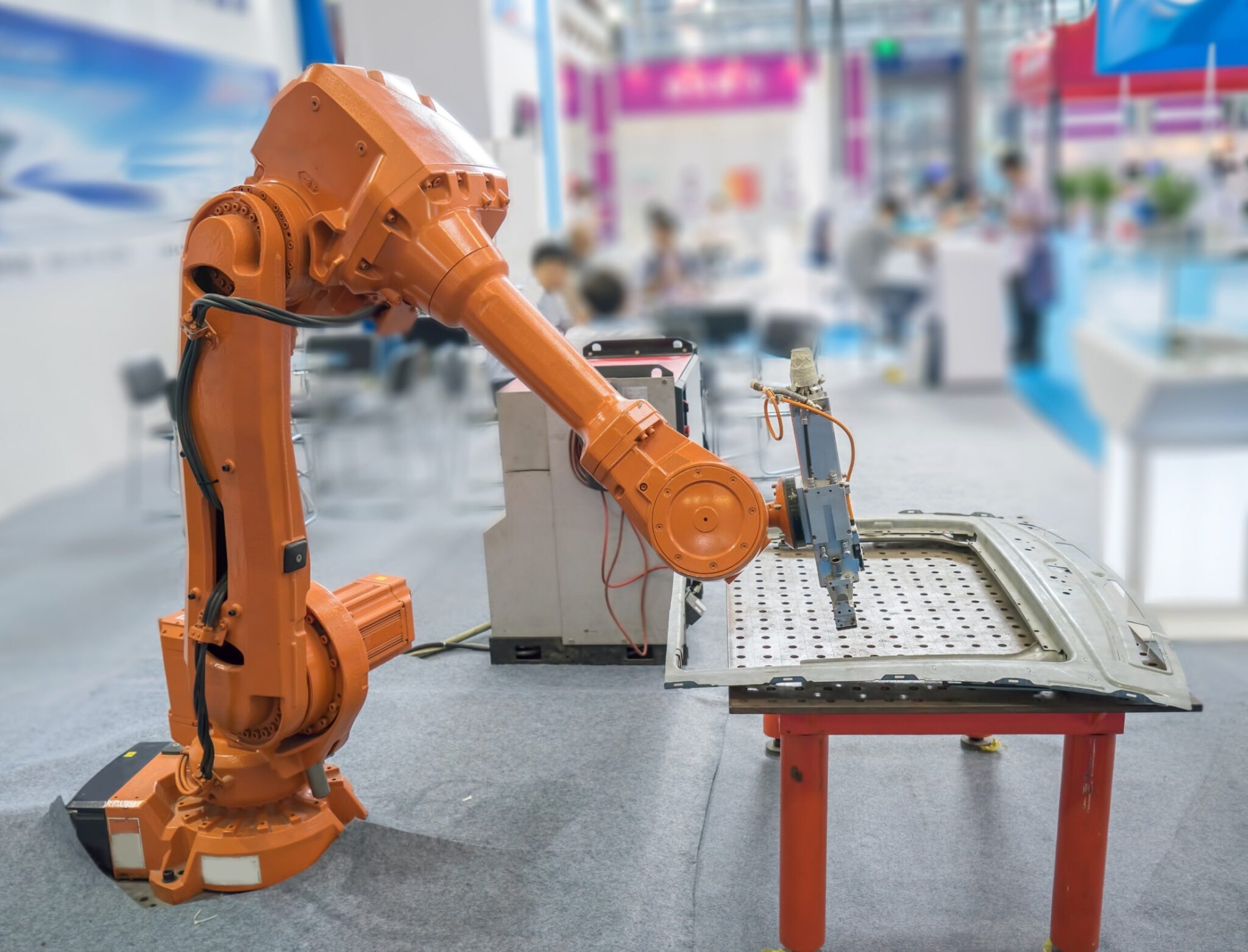
Throughput isn’t just about speed—it’s about consistent output without interruptions, rework, or imbalance. Automated Manufacturing Systems eliminate micro-delays—small inefficiencies that compound into major losses—such as idle machine time, inconsistent feeding, manual inspections, and uncoordinated cycle times.
Our Manufacturing Automation Solutionsare engineered to:
- Balance cycle times across all stations
- Eliminate bottlenecks through synchronized operations
- Reduce scrap and rework through in-line quality checks
- Maintain continuous flow with minimal manual intervention
Example: Aligning cycle times across stations in one automated line reduced idle time by 34% and increased overall equipment effectiveness (OEE) without adding new machinery.
Core Capabilities of Our Production Line Automation Services
End-to-end production line design tailored to your workflow
Integration with existing machinery and legacy systems
Real-time monitoring and centralized control systems
Scalable architecture to support future expansion
Compliance with safety and industry standards
Each system is engineered as a complete operational ecosystem, not just a collection of machines.
Business Benefits of Production Line Automation
Automation is process-specific, not industry-specific:
Reduced labor dependency:
Reallocate workforce to higher-value tasks
Higher production rates:
Increase output without extending shifts
Improved accuracy:
Minimize human error in repetitive processes
Lower operational risk:
Fewer manual touchpoints reduce variability
Consistent product quality:
Standardized processes across every cycle
An often-overlooked benefit of Production Line Automation is predictability. By reducing variability, production planning becomes more reliable. Lower downtime, higher output, and fewer rework cycles help manufacturers achieve measurable efficiency gains, with many realizing full ROI on automation within 12–18 months.
Our Structured Approach to
Production Line
Automation Implementation
Production Analysis & Planning
We start by analyzing your current production line—cycle times, bottlenecks, manual interventions, and failure points. This defines where automation will deliver the highest ROI.
System Design & Engineering
The system is engineered around your production goals, not just technical feasibility. This includes layout design, control logic, and system architecture.
Automation Integration
We integrate new automation with your existing infrastructure, ensuring compatibility with current machines, software, and workflows.
Testing & Performance Optimization
Before deployment, the system is tested under real production scenarios. Adjustments are made to optimize speed, accuracy, and reliability.
Deployment & Ongoing Support
Implementation is carried out with minimal disruption. Post-deployment support ensures the system continues to perform as expected.
Technologies Powering Our Automated Manufacturing Systems
Effective Automated Manufacturing Systems rely on a combination of proven and adaptable technologies:
PLC-based control systems
for precise process management
Robotics
for handling, assembly, and repetitive operations
Vision inspection systems
for quality control
Sensors and feedback systems
for real-time adjustments
Our technology choices focus on reliability, scalability, and long-term performance, not trends.
Why Choose RBR Automation for Production Line Automation
RBR Automation focuses on delivering systems that perform consistently under real production conditions.
Deep experience in complex automation environments
Fully customized solutions aligned with your operations
Strong focus on measurable performance improvements
Reliable long-term support and system optimization
FAQ'S
Frequently Asked Questions About
Production Line
Automation
What is production line automation?
Production Line Automation is the use of integrated systems—machines, controls, and software—to automate sequential manufacturing processes with minimal manual intervention.
How do automated manufacturing systems improve efficiency?
They eliminate delays, reduce manual errors, and ensure consistent process timing across all stages, resulting in higher throughput and lower waste.
Can automation be added to existing production lines?
Yes. Most systems can be retrofitted or integrated with existing equipment, provided proper system compatibility and planning are in place.
What industries benefit from automated production lines?
Any industry with repeatable processes—manufacturing, automotive, electronics, and packaging—can benefit from automation.
Transform Your Production Line with Advanced Automation
If inefficiencies, inconsistency, or manual processes limit output, RBR Automation delivers Production Line Automation solutions engineered for performance, reliability, and scalability.